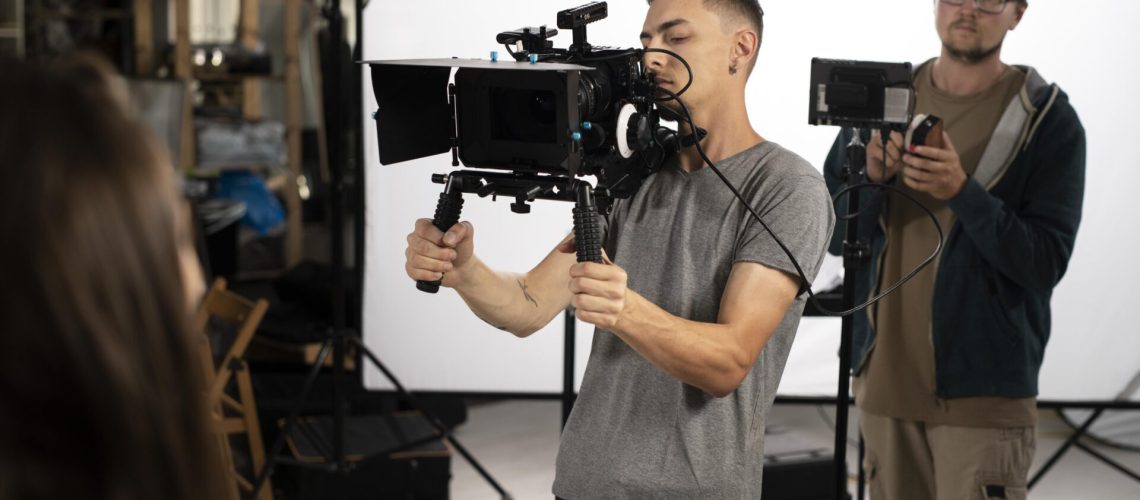
Film making is one of the most collaborative art forms in existence. No matter how skilled or creative the director is, a film cannot be realized without the collective effort of an entire team. Every crew member brings their own talent, perspective, and energy and it’s this collaboration that transforms an idea into a finished story.
The director sets the vision, but the cinematographer helps translate that vision into visuals. Production design creates the world. Sound captures the heartbeat of each moment. Editors shape the final narrative. Assistants, runners, camera trainees every role matters more than people realize.
True collaboration begins with communication. A director must articulate emotion, tone, and intention not simply shot lists. When the team understands the “why” behind a scene, they can contribute creatively rather than just perform tasks. Crew members become partners in storytelling.
On set, trust becomes everything. The DP must trust the gaffer, the 1st AC, the grip team. The director must trust the actors to interpret characters authentically. Sound recordists must trust the environment and the timing of dialogue. This trust creates harmony and efficiency.
Collaboration also thrives on flexibility. Film making is unpredictable weather changes, schedules shift, equipment fails. A strong team adapts quickly, offering solutions instead of focusing on problems. Creativity often emerges in these challenging moments.
Beyond technical teamwork, collaboration builds a sense of community. Shared long hours, shared challenges, and shared victories create bonds that last far beyond the project. Every film becomes a collective memory a reminder of what can be achieved when artists come together with a common goal.
In the end, a film is not the work of one person. It is the result of many individuals combining their craft, passion, and imagination. Collaboration doesn’t just improve the film it elevates the entire process of film making into something powerful and unforgettable.